The Rise of Quantum Computing
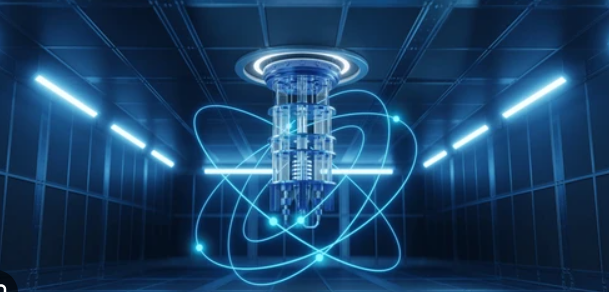
For decades, quantum computing sounded like science fiction. It was complex, expensive, and limited to academic research. But over the past few years, something has changed. Technology giants like IBM, Google, and Microsoft are racing to build more powerful quantum processors. Governments are also funding national quantum initiatives, recognizing the strategic importance of this technology.
1. Introduction: Why Quantum Computing Is Suddenly Everywhere
For decades, quantum computing sounded like science fiction. It was complex, expensive, and limited to academic research. But over the past few years, something has changed.
Technology giants like IBM, Google, and Microsoft are racing to build more powerful quantum processors. Governments are also funding national quantum initiatives, recognizing the strategic importance of this technology.
Quantum computing is no longer just a scientific experiment. It is becoming a competitive advantage.
2. Understanding the Basics: What Makes Quantum Different?
Classical Computers vs. Quantum Computers
Traditional computers use bits. A bit can be either 0 or 1.
Quantum computers use qubits. A qubit can be:
Both at the same time (a concept called superposition)
This single difference changes everything.
Superposition and Entanglement
Two key principles power quantum computing:
Superposition – A qubit can represent multiple states simultaneously. Entanglement – Qubits can be connected in ways that instantly affect each other, even at a distance.
These principles allow quantum systems to process enormous combinations of possibilities simultaneously.
In simple terms, while a classical computer checks solutions one by one, a quantum computer can evaluate many solutions at once.
3. Why Quantum Computing Matters
Quantum computers are not meant to replace your laptop or smartphone. Instead, they are designed to tackle extremely complex problems.
Drug Discovery and Healthcare
Simulating molecules is incredibly complex. Quantum systems can model molecular structures far more accurately than classical systems.
This could:
Accelerate drug discovery
Reduce research costs
Improve personalized medicine
Pharmaceutical breakthroughs that once took years could potentially take months.
Climate Modeling
Predicting climate patterns involves massive datasets and complex simulations.
Quantum computing may improve:
Weather prediction accuracy
Carbon capture optimization
Renewable energy efficiency
Better modeling leads to better policy decisions.
Financial Optimization
Banks and investment firms analyze millions of variables daily.
Quantum computing could:
Optimize portfolios
Detect fraud faster
Improve risk modeling
Financial institutions are closely watching quantum progress.
Logistics and Supply Chains
Companies managing global supply chains must optimize routes, inventory, and timing.
Quantum systems may drastically improve:
Route optimization
Warehouse management
Traffic prediction
Even small efficiency improvements could save billions globally.
4. The Current State of Quantum Technology in 2026
Hardware Challenges
Quantum computers are extremely sensitive.
They require:
Near absolute-zero temperatures
Isolation from vibrations
Highly controlled environments
This makes them expensive and technically challenging to maintain.
Error Correction Limitations
Quantum systems are prone to errors due to environmental interference.
Developing stable, error-corrected qubits is one of the biggest challenges researchers face today.
Progress is steady—but we are not yet at mass-scale deployment.
Cloud-Based Quantum Access
Instead of owning quantum hardware, companies are accessing quantum systems through the cloud.
Platforms like IBM’s quantum cloud services allow researchers and developers to experiment without building their own quantum labs.
This democratizes access and accelerates innovation.
5. Quantum Computing and Cybersecurity
One of the most discussed impacts of quantum computing is on encryption.
Breaking Traditional Encryption
Many current encryption systems rely on mathematical problems that are difficult for classical computers to solve.
Quantum computers could potentially solve these problems much faster.
This raises concerns about:
Data security
Government secrets
Financial transactions
Post-Quantum Cryptography
To prepare, researchers are developing “quantum-resistant” encryption methods.
The cybersecurity industry is already planning for a post-quantum world—even though large-scale quantum systems are still emerging.
Preparation now prevents panic later.
6. Economic and Geopolitical Impact
Quantum computing is becoming a matter of national security.
Countries investing heavily in quantum research see it as:
A military advantage
An economic growth engine
A strategic technological asset
The race for quantum dominance may shape global power structures over the next decade.
7. Common Misconceptions About Quantum Computing
“Quantum Will Replace All Computers”
Not true. Quantum computers excel at specific complex problems. Classical computers will remain essential for everyday tasks.
“Quantum Is Fully Ready”
While progress is impressive, we are still in early-stage development. Large-scale, fully fault-tolerant systems are still years away.
“Only Scientists Need to Care”
Business leaders, developers, investors, and policymakers all need basic quantum literacy. The impact will extend beyond physics labs.
8. How Businesses Should Prepare
Companies don’t need quantum computers today—but they should:
Monitor industry developments
Invest in research partnerships
Explore hybrid classical-quantum strategies
Prepare cybersecurity upgrades
Early awareness creates competitive advantage.
9. The Road Ahead: 2026 and Beyond
Experts predict the next 5–10 years will bring:
More stable qubits
Improved quantum error correction
Increased commercial applications
Integration with AI systems The combination of AI and quantum computing could unlock entirely new computational capabilities.
10. Final Thoughts
Quantum computing represents one of the most ambitious technological pursuits of our time.
While it may not impact everyday consumers immediately, its influence on healthcare, finance, logistics, climate science, and cybersecurity could be revolutionary.
We are not fully in the quantum age yet—but we are standing at its doorway.
The organizations investing today may define the technological landscape of tomorrow.
This profile is an independently written ShowPulseNation editorial summary for readers. Details are compiled from publicly discussed career highlights and may be updated as new information appears.